
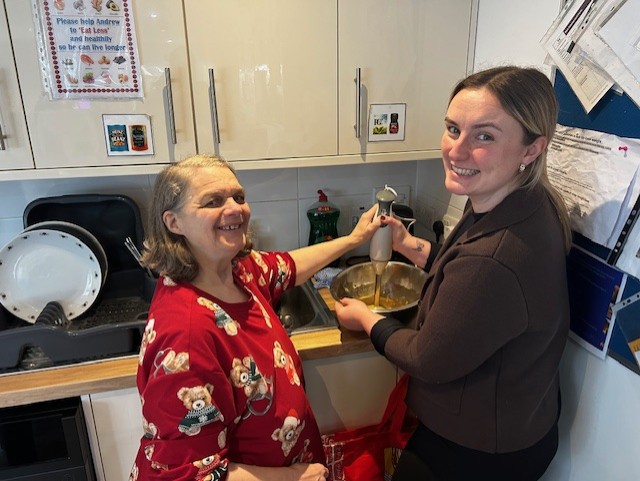
Tracey’s garden breakthrough
Tracey loves gardening. A trip to the garden centre can brighten her whole week. She enjoys choosing plants and ornaments before heading home to spend time outside, where she’s completely in her element.
Tracey has lived at our supported living home in Emsworth for around six years. She’s funny, bubbly and has a brilliant sense of humour. The people who support her describe her as good fun and someone who brings a lot of personality to her home.
Although Tracey doesn’t communicate using words, her support team know her well. They understand what she’s telling them through her body language, facial expressions and Makaton.
When Tracey wasn’t herself
So when Tracey stopped wanting to do the things she used to enjoy, the team knew something wasn’t right.
She became less settled at home, found some relationships with housemates more difficult and began refusing support from some staff. There were times when she seemed distressed in ways the team had never seen from Tracey before.
Because they knew her so well, they knew she was trying to tell them something.
Pushing for answers
The team had to get to know Tracey again. The things that had she had enjoyed and made her happy weren’t always working anymore. There was clearly a problem, we just didn’t know what it was and Tracey wasn’t able to tell us.
The team kept asking questions and pushed for medical investigations. Eventually Tracey was diagnosed with diverticular disease, a condition that can cause significant pain and discomfort. Looking back, it helped explain so much.
With changes to her diet, exercise and pain management, Tracey’s health needs became much better understood and supported. She also found her own way of letting staff know when she needed pain relief by signing “tablet” using Makaton.
Alongside this, staff worked with doctors, FitzRoy’s Positive Behaviour Support team and the local learning disability team to rebuild Tracey’s support around what they were learning. They looked at her health, her relationships, her routines, the environment around her and the things that mattered most to her.
Making sure Tracey was heard
That wasn’t always easy. Staff sometimes had explain that what they were seeing was new for Tracey. They had to advocate for her and make sure her voice wasn’t missed.
The team also reflected on how much had changed at home. Some long-term housemates had moved away or sadly passed away, leaving Tracey to adjust to a very different environment. For someone who doesn’t use words to explain how she feels, that kind of change can be huge.
A garden centre trip that changed everything
Then came an unexpected breakthrough. A member of staff suggested a trip to a local garden centre and Tracey loved it. She chose plants and decorations and was over the moon.
Since then, gardening has become much more than a hobby. It gives Tracey quiet time away from everyone and everything going on, one to one time with staff and an activity that helps her feel calm and settled.
When Tracey is in the garden, staff say she’s in her element. She engages well with the people supporting her, relaxes and enjoys being outside.
That new found confidence has opened the door to other things too. Tracey has enjoyed pottery and now goes to the hairdresser every week for a wash and blow dry. She also enjoys trips to the nail salon after finding chiropody appointments difficult.
Getting on with living her life
By thinking differently, the team found ways to make everyday routines more enjoyable and dignified. Washing hair, looking after nails and getting out of the house can easily become tasks on a support plan. For Tracey, they’ve become positive experiences – a chance to be pampered and feel good.
To help Tracey feel more settled, the team also introduced a two-week visual timetable using simple photographs, making it easier for her to know what’s happening and what to expect.
Staff are also exploring whether moving Tracey to another flat at the same location could give her a calmer environment while allowing her to stay close to the people who know her well. Rather than jumping straight to a new placement, they’re looking at what can change around Tracey so she can stay somewhere familiar, with trusted staff alongside her.
Today, Tracey is happier and spending more time doing the things she enjoys. Staff have worked hard to rethink and rebuild her support around what works best for her.
Tracey’s story shows just how important it is to really know someone. The team noticed when things weren’t right, kept asking questions and never stopped looking for answers. Now, Tracey is so much happier and getting on with living her life.
Help more people live life their way
Stories like Tracey’s show the difference good support can make. Help us support more people to enjoy the ordinary moments that matter.